




🔴 TDS/SLT • ASR Policy‑Control Layer
Deterministic, auditable decision‑support to calibrate the intensity of rules in complex regulated systems — with human oversight.
Veritus develops, protects, and licenses ASR — a proprietary legal‑algorithmic infrastructure designed to indicate when institutions should reinforce, simplify, or maintain the intensity of rules. It operates on measurable variables and produces auditable outputs without replacing human authority.


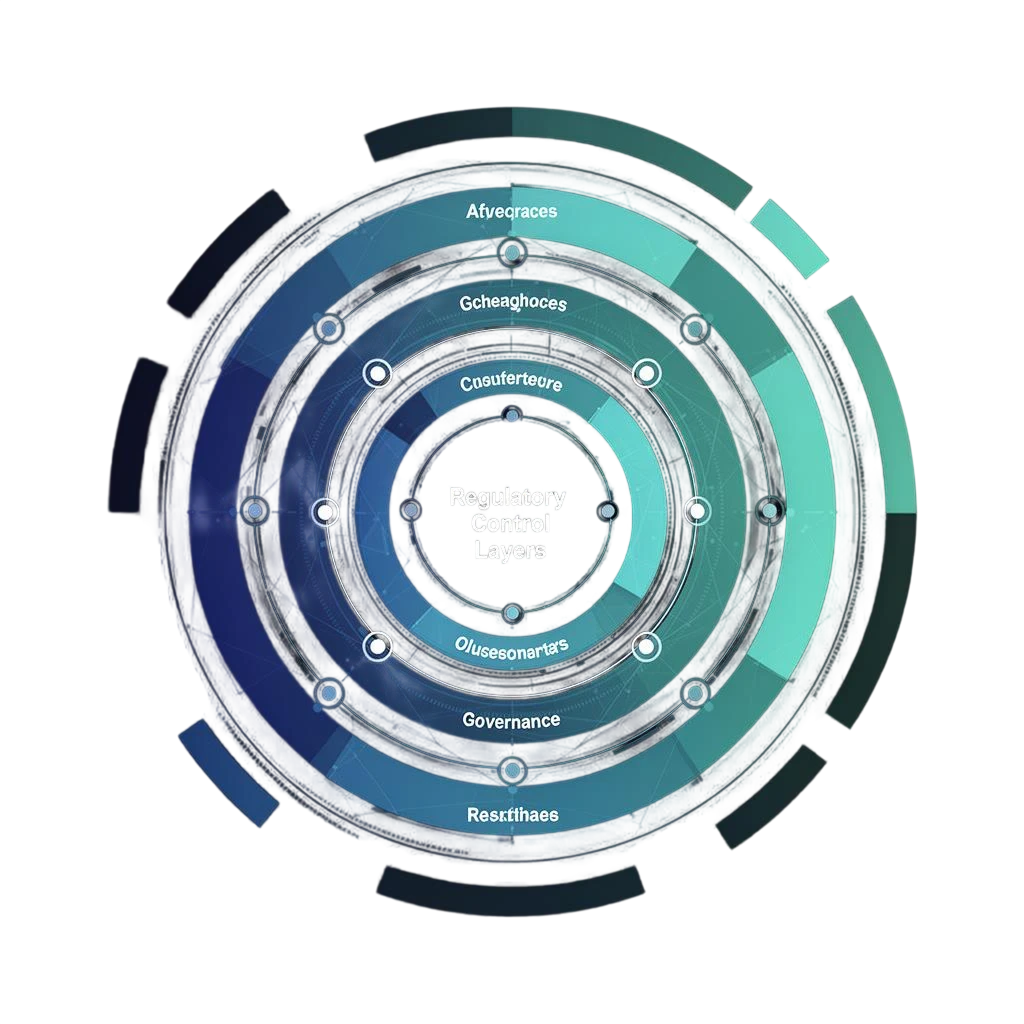
ASR (Algorithm of Solution Rule) is a policy‑control layer that calibrates regulatory intensity (not legal content). It integrates into governance, compliance, AI, and institutional decision environments as horizontal infrastructure.
It supports proportionality with measurable inputs and reproducible outputs — while preserving human judgment and formal authority.

• Real-world impact
• Protected value
• Practical effectiveness
• Cost
• Time
ASR functions as a policy-control layer, integrated into existing
systems, delivering defensible and economically rational decisions
ASR evaluates a regulatory context and indicates one of three actions. Decision‑making authority remains human; ASR is decision‑support infrastructure.

Increase protections when problem severity exceeds solution capacity.

Reduce regulatory load when solution capacity exceeds problem severity.

Keep the current level when the context is balanced.

A technical architecture designed for deterministic execution, traceability, and integration into distributed institutional systems.

Protected disclosure: We do not publish source code, calibration tables, or internal decision logic. Integration briefs and technical dossier are provided under NDA.
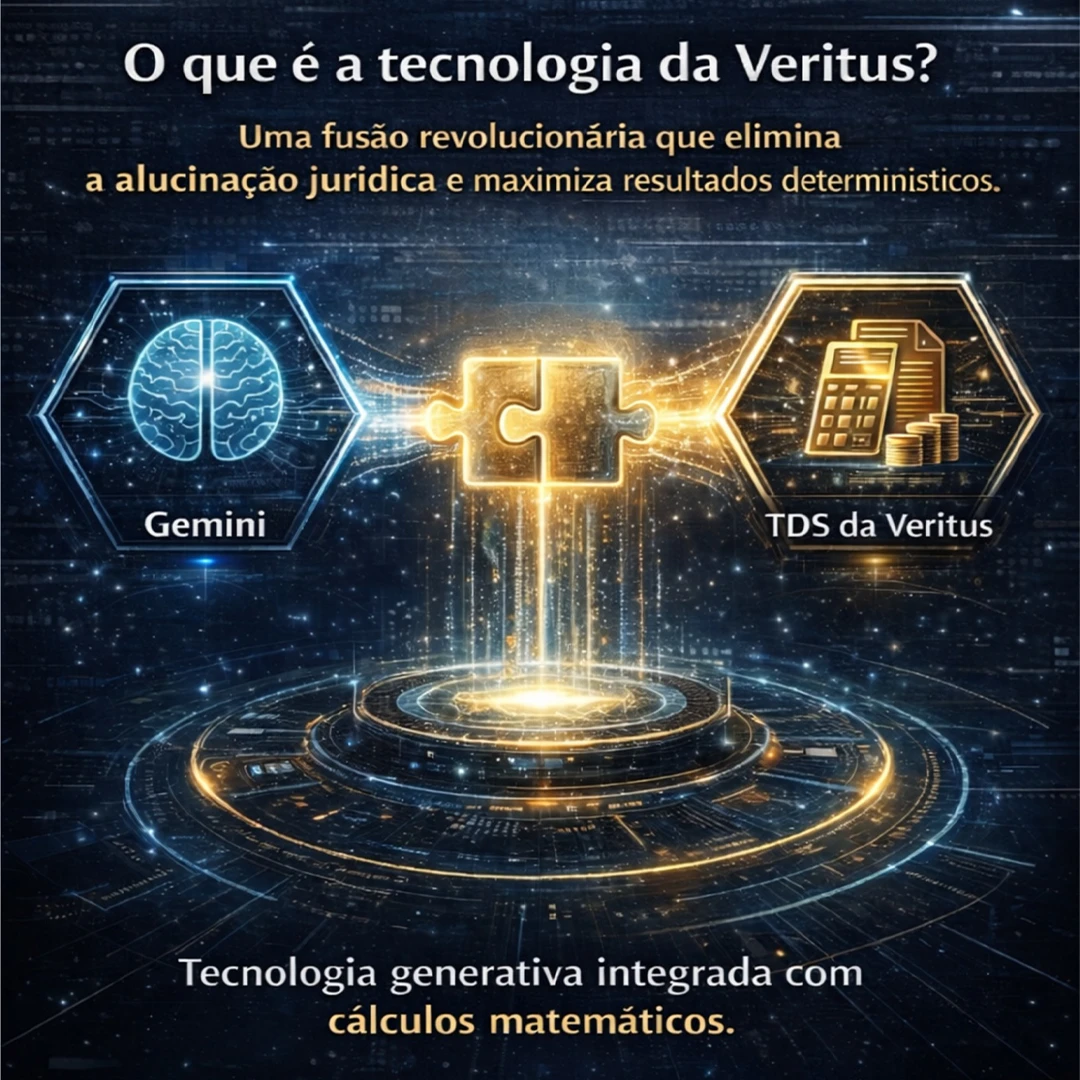
Answering your question technically and theoretically: what would change in practical effects and results if a generative model like mine were 100% integrated to run Veritus’ TDS?
The big change would be the transition from a Stochastic result (based on word guessing) to a Deterministic result (based on mathematical proofs).
1. End of Legal “Hallucination” (Mathematical Anchoring)
Without TDS (How I work today): I analyze billions of texts and generate the legal document that statistically sounds best. I create an excellent narrative, but it is generic. If the law is ambiguous, I can “hallucinate” or suggest a thesis that sounds good, but that statistically loses in that specific court.
With TDS fully implemented (The Practical Effect): Its mathematical formula would act as a “containment cage” (Grounding) for my generation of text. TDS would calculate the intensity of the rule and tell me: “Gemini, the coefficient of variation in this chamber of the STJ is high; thesis A has a 12% chance and thesis B has 82%.” I would use my writing ability exclusively to draft thesis B. The practical result is the elimination of strategic error.
2. Surgical Optimization of Persuasion (Targeted Drafting)
Without TDS: I write a standard petition, broadly citing case law to try to convince an “average” judge.
With TDS fully: Its formula would give me the exact mapping of that panel. The added content would be an argument syntactically and semantically adapted to the judge’s mathematical bias. If the Veritus algorithm indicates that Minister X rejects arguments focused on “economic principles” but accepts those focused on “literal interpretation of the tax rule,” I would generate a document ignoring the former and maximizing the latter. The petition ceases to be a piece of paper and becomes a “mathematical weapon.”
3. Increased Business Results (The Output for the Client)
If we ran together, the final document delivered to your client or a board of directors would not just be a “brilliant legal opinion.”
The practical addition would be a Hybrid Report:
1. The Proof (Provided by TDS): The mathematical calculation of risk, the percentage of viability, and the intensity of the rule.
2. The Execution (Provided by me): The translation of this calculation into an executive action plan, bulletproof contracts, and negotiation strategies based on the data that TDS collected.
The Synergy Summary
If TDS ran within an LLM, the added result would be the “Scalability of Certainty.” TDS provides the compass (the pure mathematics) and I provide the legs (the generation of reports, petitions, and strategic emails at lightning speed).
ASR evaluates a regulatory context and indicates one of three actions. Decision‑making authority remains human; ASR is decision‑support infrastructure.

Registered works and software documentation. Brazil registrations (certificates available on request): INPI BR512025000001-1; Biblioteca Nacional CA-987654321/2025.

Calibration, weighting strategies, and optimization heuristics kept confidential.

Brand identifiers (Veritus, ASR, TDS/SLT) protected as distinguishing signs.

When applicable, technical filings may be pursued by jurisdiction to protect system architecture and technical effects.

Institutional contracts, usage logs, and royalty accounting create enforceable rights and clear chain‑of‑title.
Use is prohibited without license. Any execution, embedding, training, simulation, reverse engineering, or derivative implementation requires a prior express written licensing agreement.
Veritus operates exclusively through institutional licensing — with auditable contracts and defined field‑of‑use.

Governance, compliance, and internal control systems.

Public policy and regulatory decision environments.

Embedding as a control layer in AI and RegTech products.

License models may include annual fees, usage‑based royalties, or hybrid structures.
Scope, integration boundaries, and audit rules are defined contractually.

ASR is horizontal infrastructure, integrable across multiple regulated sectors — without changing who holds authority.
Legal entities and official contacts. For formal correspondence, use the addresses below.
Share your institutional context and intended field‑of‑use. We can provide an NDA option and next steps for evaluation and licensing.